
Port St Johns
Africa’s adventure playground, where untamed nature and ancient legends meet the mouth of the Umzimvubu River.
The Place
Paradise in Pondoland
Affectionately known as the Jewel of the Wild Coast, Port St Johns is a charming coastal town offering true Pondoland hospitality. Established in the late 1800’s, it is nestled between two mountains – Mount Sullivan and Mount Thesiger – at the mouth of the Umzimvubu River.
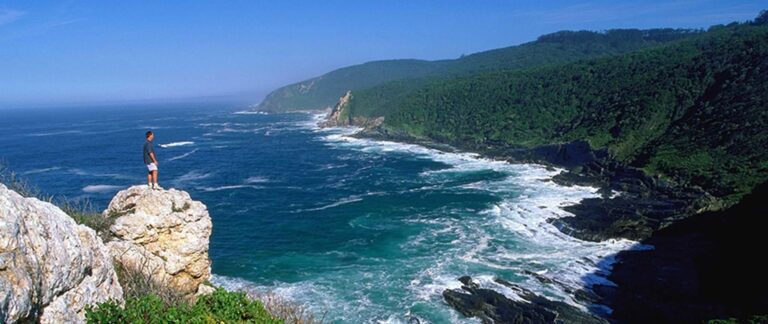
The landscape consists of pristine beaches and towering cliffs covered in sub-tropical vegetation. The combination of the warm Indian Ocean, high rainfall and fertile soils creates a paradise waiting to be discovered. Because Port St Johns is malaria free, it has long been a favourite location for the movie industry – it has all the geographical features to mimic just about anything in Africa, and the rest of the world.
The movies ‘Winnie’ – about Nelson Mandela and his wife – and ‘Schweitzer, the movie’ were filmed here, amongst many others.
Things to do · Places to see
The Expedition Grid
Paths are everywhere, as the locals walk from village to village. Drift sideways through the coast – collect what calls to you, and build your own itinerary.
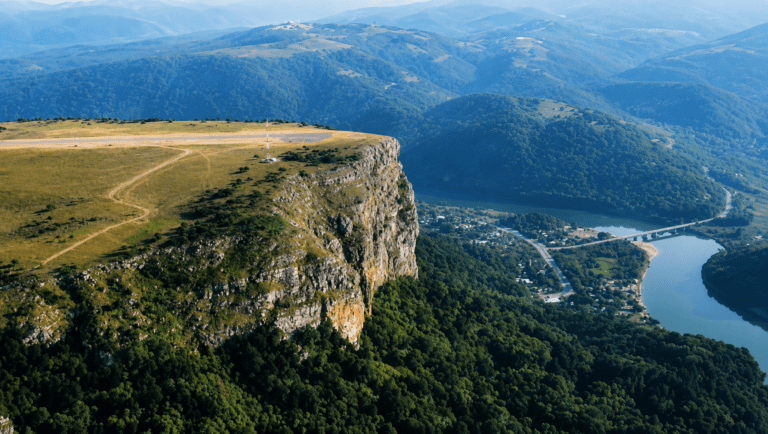
On top of Mount Thesiger, stopping at the cliff edge, lies a 1.5km airfield used for private charters - and one of the finest places for sundowners or a picnic above the town. The Old and New dams below are superb for bird watching and bass fishing.
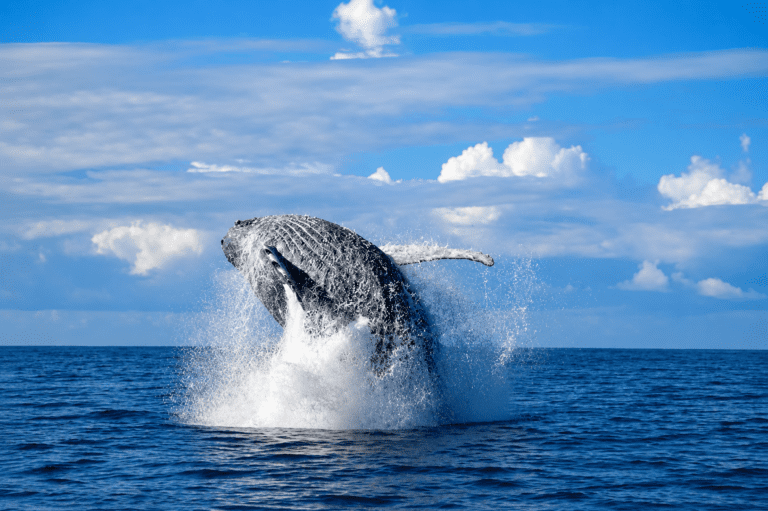
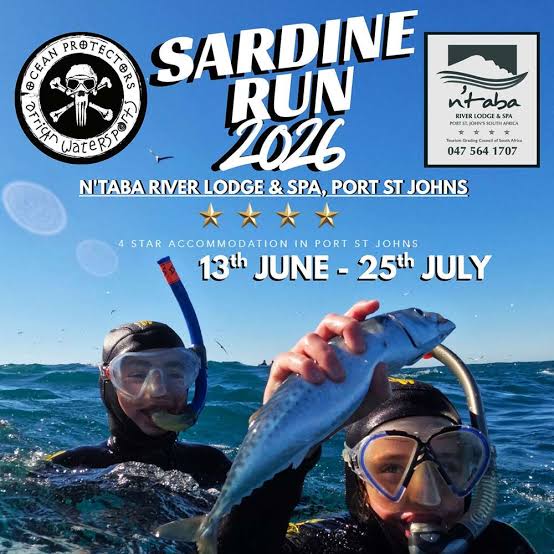
Marine mammals are seen year round, best in June and July during the Sardine Run. Common porpoise play in the surf at Second Beach; bottlenose dolphin are frequent, while Heavyside's and Risso's dolphin stay in deep water offshore.
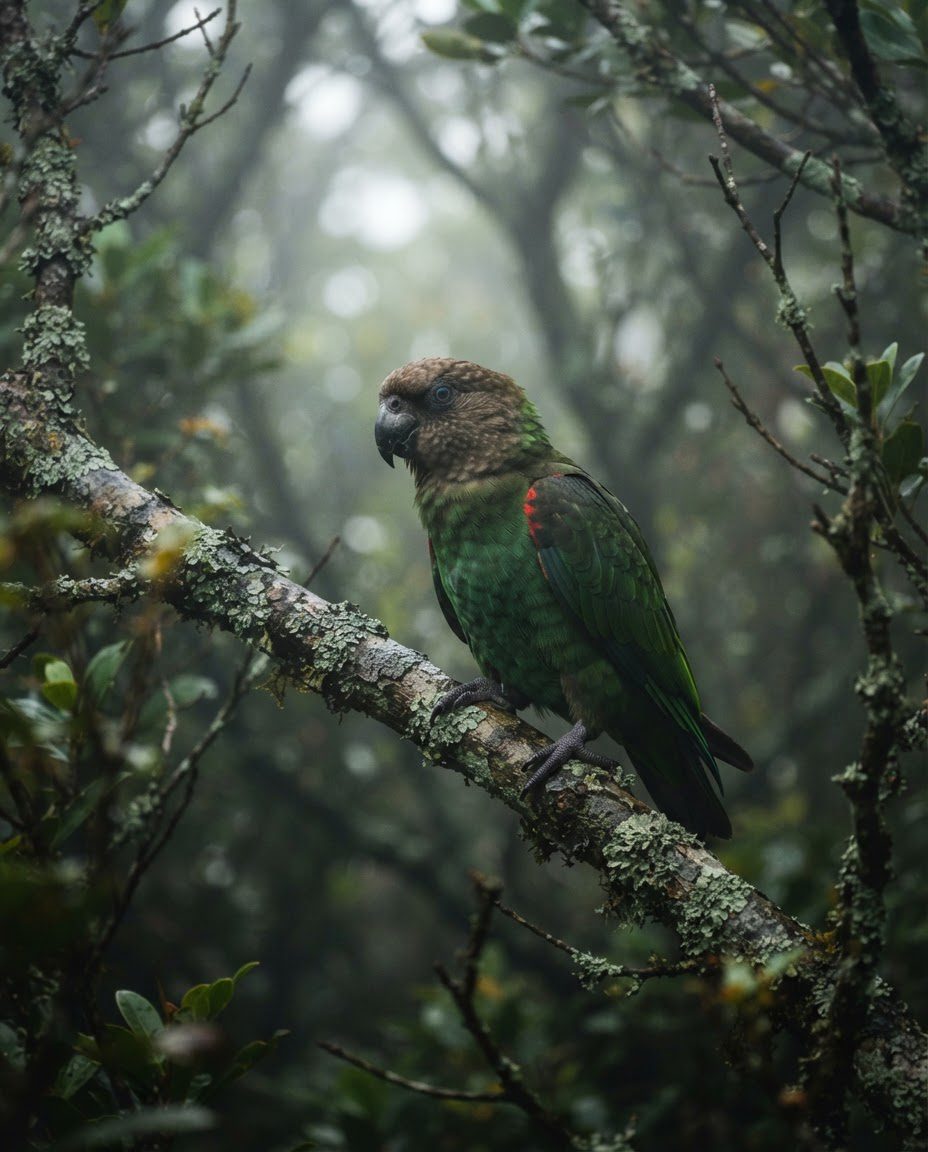
Over 250 species have been recorded within a 10km radius of Port St Johns. The rare and endangered Cape Parrot is found here, as is the Spotted Ground Thrush. Many pelagic species arrive in the winter months.
The Umzimvubu, one of South Africa's largest rivers, ends its long journey from the mountains here. From the mouth there are 20km of flat water, excellent for canoeing and boating, with river cruises on the pleasure barges.
The cliff that overlooks the town; a brisk walk takes you to the summit in about an hour, with the path starting at the entrance to town. The forest is full of birds and plants, and is the only place where the one-leafed Streptocarpus ssp. grows.
Natural sulphur springs just outside town whose waters are used by the local peoples for medicinal purposes. They have become an integral part of mPondo culture.
This beach to the north is one of the most isolated - a few huts en route, and then nothing except Africa. Fishing from the rocks on the south side of the river produces good catches of Garrick and Kob in season.
The 'town' beach at the mouth of the Umzimvubu. Because the flow of the river changes continuously, so does the beach - sometimes a kilometre of sand, sometimes only a small patch opposite Ferry Point. The lighthouse overlooks it.
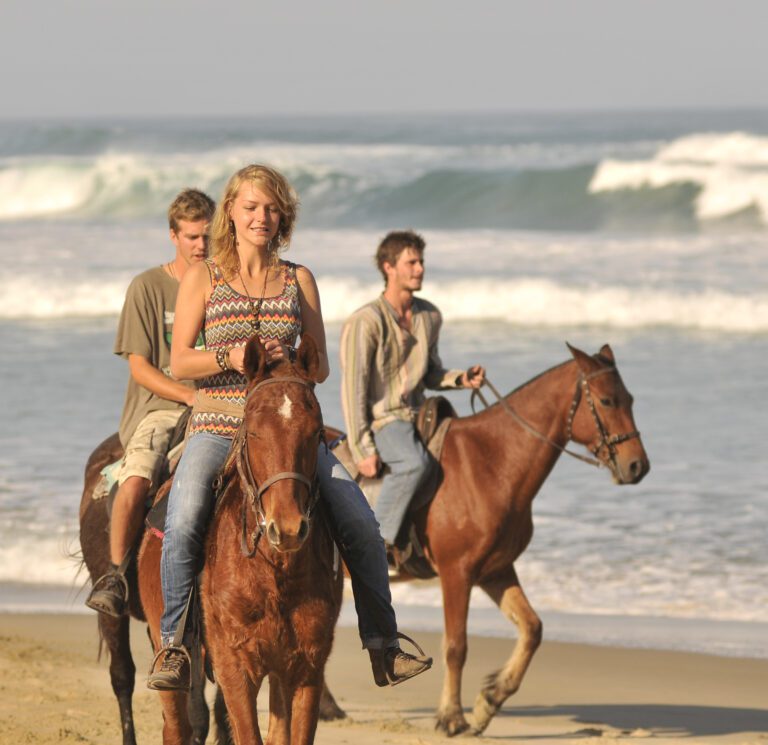
Seeing the Wild Coast from horseback is popular. Galloping along unspoilt beaches at the water's edge is a wonderful experience.
As with hiking, you can choose easy roads to cycle, or find hectic paths on which to practise single tracking.
A small coastal reserve stretching from Second Beach to Sugarloaf Rock, with evergreen indigenous forest. Home to Blue Duiker and Bushbuck. Bird watching, short hikes and fishing from the rocks can be enjoyed here.
On the cliff face overlooking Cape Hermes Bay at the Umzimvubu River Mouth sits the lighthouse, built in 1904. It is a restricted area, but permission to view the inside can be obtained from the lighthouse keeper.
This small museum on the Main Road showcases the area's history and culture.
This valley, a thirty minute drive from Port St Johns, is a birder's paradise.
The Wild Coast is not the ideal snorkelling destination, but in quiet bays and rock pools many different species can be seen. Scuba diving is mostly done during the Sardine Run.
The Port St Johns Golf Club is the oldest in South Africa, and boasts the prettiest nine-hole course. Non-members are welcome.
Rivers & Estuaries
Home of the Hippo
The Wild Coast has numerous rivers in addition to the Umzimvubu. Close to Port St Johns are the Umngazi, Umngazana, Ntafufu and Sinangwana Rivers. ‘Umzimvubu’ means home of the hippo in Xhosa. Hippo and other wildlife were once common, but were shot out in the early 1900’s. In 1931 South Africa’s most famous hippopotamus, Huberta, took up residence in the river for a short while before continuing on her way to King Williams’s Town.
Rivers and estuaries are breeding grounds and nurseries for many fish species. During the summer months, because of the topsoil washed in from inland, the river is a chocolate brown; in the low-rainfall winter months it turns a beautiful blue. The Umngazana estuary has Africa’s southernmost mangrove swamp, with three species of mangrove growing there.
All estuaries are great spots for recreational fishing. Rare birds such as the Mangrove Kingfisher flit in and out of the vegetation, and several pairs of the majestic African Fish Eagle are resident. Canoeing is the only way to really enjoy the rivers – and with no hippos or crocodiles in the area, it is safe to do so.
Fishing
Rock and surf, fly fishing and deep sea fishing are all popular here, and many world records have been broken in these waters.
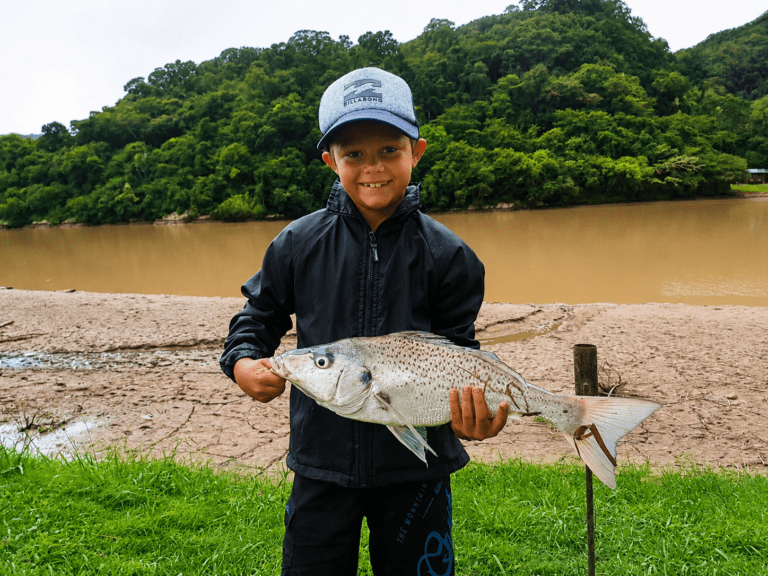
Fishing is a way of life to many locals, and good catches can be had all year round. Annual runs of Grunter, Garrick (Leervis) and Cape Salmon (Cob / Kabeljou) bring fishermen to Port St Johns in August and September.
The Wild Coast is also famous for its crayfish – East Coast Lobster – caught by local fishermen, while oysters and mussels are harvested from the rocks.
Sardine Run
The marine equivalent of the Masaai Mara
It is not understood why millions of the tiny sardines Sardinos sagax move northwards up from the cold waters of the Antarctic in shoals that are often kilometres long. The first shoals are spotted between East London and Port St Johns in June, after the first winter gales. The shoals continue north towards KZN, the rest disappear into the deep ocean, and the migration is repeated again the next year.
Pelagic birds not normally seen in the area arrive in huge numbers, especially Cape gannets. Many species of shark and dolphin follow the shoals and take part in feeding frenzies called bait balls – often thousands of dolphins in one school. Seals, penguins, sailfish and marlin get caught up in the excitement, and Brydes whales are now often seen feeding on the sardines.
The Run coincides with the annual migration of whales to their breeding grounds off Madagascar, and sightseers are occasionally treated to the spectacle of a double breach. It is Port St Johns’ busiest peak period: for more than a month the town is filled to capacity with scuba divers, sightseers, photographers and cinematographers.
Animals & Birds
250 species, one forest
Silaka Nature Reserve, to the south, is home to small indigenous mammals such as the blue duiker (puti), bushbuck, porcupine and genet. Vervet monkeys are common around town and the shy samango monkeys are seen occasionally. A troop of Chacma Baboons lives at the top of Mount Thesiger — also the only local area where Gurney’s sugar birds feed on the Protea trees.
Cape clawless otters and the occasional mongoose can be seen, as are porcupines and leopards. Rock hyraxes live on the rocks, and the seldom seen but often heard tree hyrax is common — its blood-curdling scream is said to predict rain.
Insects are many and varied, and the area is a butterfly collector’s dream, with rarities such as the Evening Brown, Gnophodes Betsinen, and the endemic Charaxis Pondoensis found here. Over 250 bird species occur, including the rare Cape Parrot — water birds, forest dwellers, grassland and pelagic species can all be seen.
Beaches
Only your footsteps
The Wild Coast is renowned for its isolated and beautiful beaches, where often only your footsteps will be those in the sand. The coast is named for its wildness, and although safe swimming can be had at some beaches, the weather and seas can be unpredictable. Second Beach has had shark attacks, and is no longer recommended as a swimming beach.
It is hoped that tidal pools will be built as soon as possible so that safe swimming can be had by all. No beaches have shark nets or any other shark protection method – swimming is at your own risk. Rock pools and natural ‘mermaids’ pools are the best place to enjoy the water.
Four tips for swimming without a lifeguard
1. Be Prepared
Always wear appropriate beach attire – everyday wear is heavy when wet and can pull you down. Be sun smart with sunscreen and hats.
2. Watch Out for Yourself and Others
Pay close attention to children in or near water. Swim with others, between the flags, where surf lifeguards patrol, and listen to their advice.
4. Be Aware of the Dangers
If a beach has no patrol flags and you are unsure, don’t risk it. Enter unknown water feet first, obey safety signs and never swim after drinking.
4. Know Your Limits
Learn safe ways of rescuing others without putting yourself in danger.
The People
The AmaPondo
The people of Port St Johns do South Africa’s Rainbow nation proud. Walking around town you will hear many languages spoken – from the traditional person who lives in the rural areas and is visiting town, to the sophisticated businessman in a suit, you will encounter them all. They are farmers, crafters, professionals, fishermen and artists.
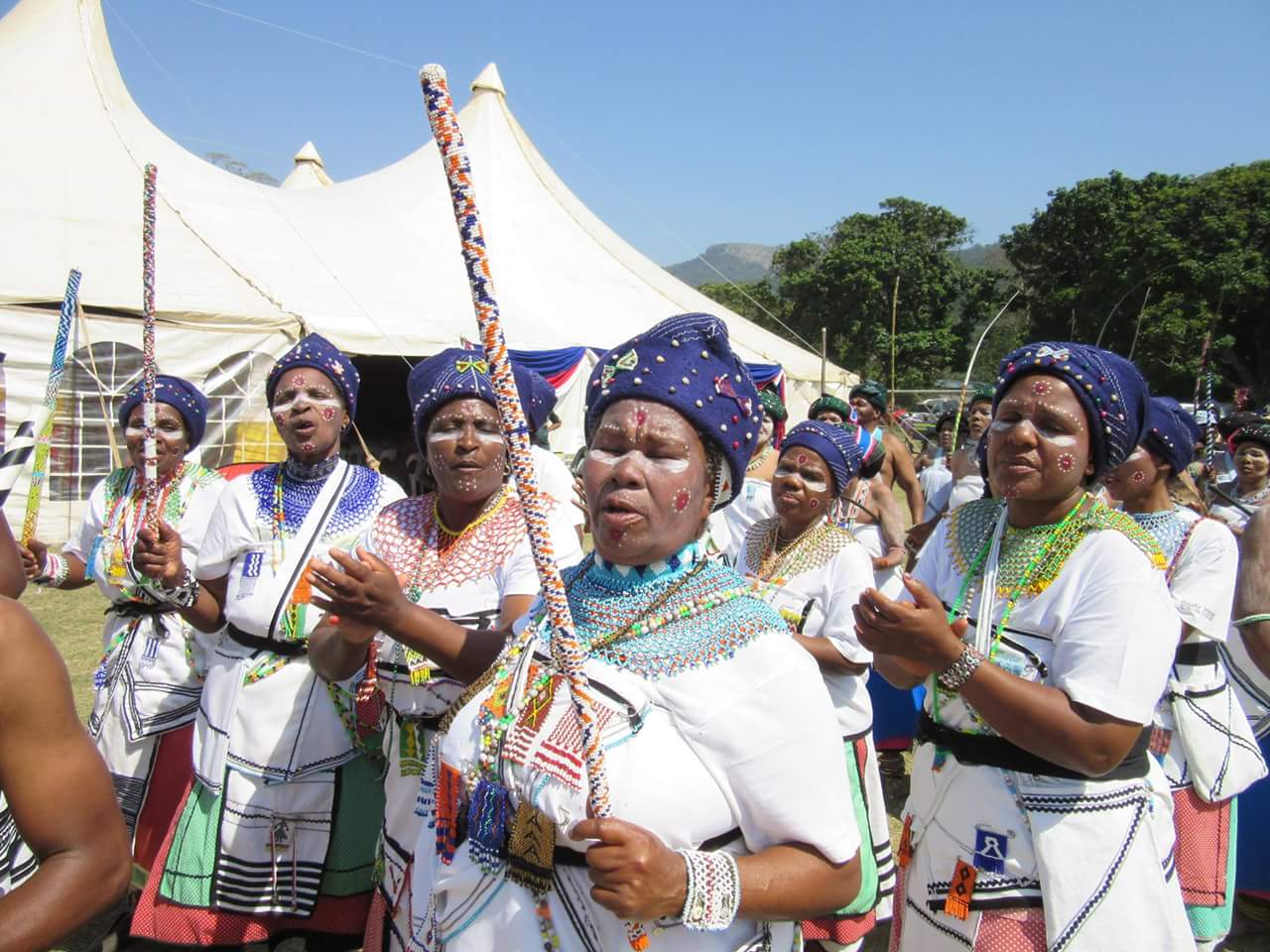
The people of Pondoland are the AmaPondo, part of the Xhosa people – a proud people who will welcome you into their homes in the best of African traditions. Their culture and traditions are rich and colourful, and a visit to a traditional kraal to experience traditional dancing and food should be on everybody’s list.
The Mpondo keep their traditions alive in this modern age. Beadwork – a traditional way of telling stories – is taught to new generations, as is basket weaving and pottery making. The carved wooden fish of Port St Johns are unique, and should be taken home as souvenirs.
History, Culture & Crafts
The area was originally inhabited by the Strandlopers, Khoi and San peoples. African peoples moved southwards at about the time the first Portuguese shipwreck survivors passed along the Wild Coast.
1552
The Portuguese ship Sao Joao was long thought to have wrecked off Port St Johns – in fact she went down near Port Edward. The most logical origin of the name is a Portuguese ship passing the river on St Johns Day, 24th June.
mid 1800's
King Faku enters negotiations with the British, culminating in the sale of the land along the Umzimvubu River by Faku’s son, Nquliso, for £1000.00.
1940's
The bar across the river mouth becomes impassable to big ships; the town stops operating as a port and turns to farming.
1782
Always wear appropriate beach attire – everyday wear is heavy when wet and can pull you down. Be sun smart with sunscreen and hats.
31 Aug 1878
The British flag is raised at Port St Johns.
1976 - 1994
Part of South Africa until Transkei became independent in 1976, and reincorporated in 1994.
1800's
First established as a fresh water and vegetable supply station for British ships. It nearly became a German outpost, but that was very short lived.
1912
The Waratah, which disappeared without trace, was last seen and heard of near Port St Johns.
Today
Port St Johns has again taken its rightful place amongst South Africa’s prime tourism destinations, offering varied activities and accommodation in its beautiful setting.
Day Trips
Beyond the Gates
Nelson Mandela Museum, Mthatha
Nelson Mandela was brought up in the Qunu area about 30km from Mthatha. Two museums honour him – the main one in the historic ‘Bhunga’ building including the Mandela Gifts, and the Mveso Museum at Qunu, purpose built on a rise overlooking Qunu.
Hole in the Wall
Near Coffee Bay. The trip is a few hours drive, but a visit to this Wild Coast icon is worth it.
Magwa Falls & Tea Plantation
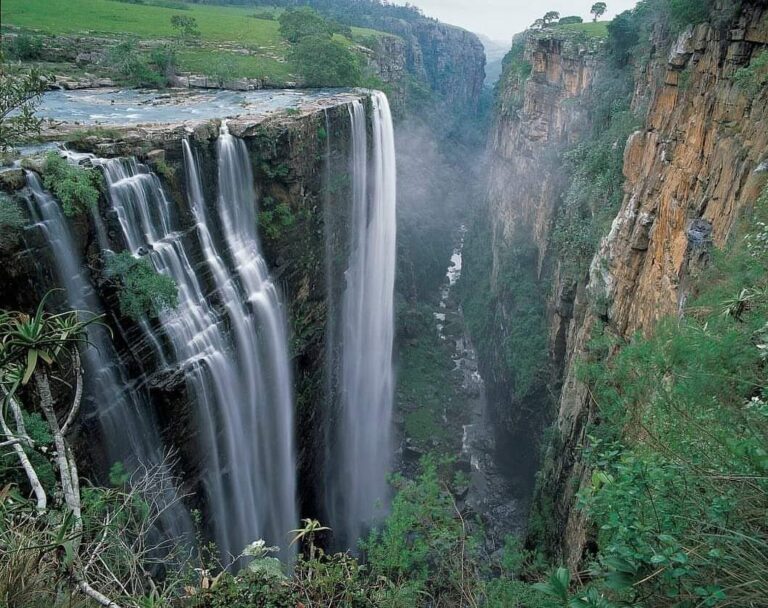
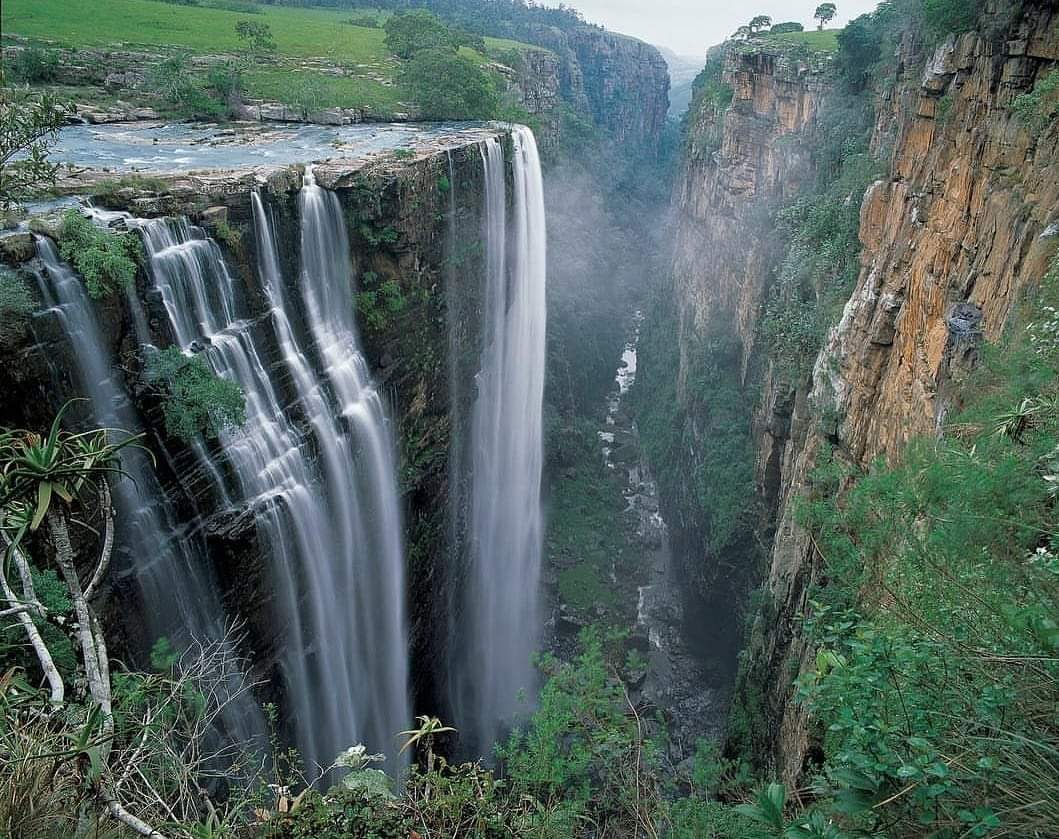
Magwa Falls lies in the Magwa Tea Plantation near Lusikisiki – the highest waterfall in the Transkei. Frazer Falls and Vistors / Angel Falls are in this area too.
Rock Paintings
Rock art can be viewed near Maclear, a small inland town about two hours away. In winter it often snows in Maclear, and locals take the opportunity to go there for a snowball fight.
Directory
Where to stay, who to ask
Port St Johns has a range of accommodation to suit the budget backpacker and the family lodge booker alike – self-catering, bed and breakfast, lodges and backpackers.
Lodges & Guest Houses
- N’Taba River Lodge — Buggs Moodley, 083 453 7375 · B&B / Guest House / Conference / Spa
- Port St Johns River Lodge — Este / Ancil, 047 564 0005 · Self catering / B&B / Lodge
- Umngazi Hotel & Spa — Brenda McCann, 082 331 9528 · Resort / Spa / Conference
- Umzimvubu Retreat Guest House — Dries / Elsa, 047 564 1741 · B&B / Self catering
- The Spotted Grunter Resort — Shaz, 047 564 1279 · Restaurant / Bar / Pet friendly
- Cremorne Holiday Resort — Sharon / Joan, 087 151 4962 · Caravan & Camping
Self Catering & Backpackers
- Amapondo Backpacker Lodge — Neil / Amanda, 083 315 3103
- Jungle Monkey Backpacker — Papa G / Khanysa, 047 564 1517
- A-frame Beach Cottage — Ursula Gaitskill, 072 408 8158
- Ansukaja Beach Cottage — Ursula Gaitskill, 072 408 8158
- Ntafufu Eco Lodge — Armin, 060 678 6443 · Canoeing
- Silaka Nature Reserve — Reserve Manager, 071 607 6690 · Nature reserve / Hiking
Activities & Adventure
- Offshore Africa — Rob / Debbie, 084 951 1325 · Sardine Run specialists, river barge, photographic excursions
- Wild Tours & Hikes — Jimmy, 082 507 2256 · Sight seeing / PSJ to Coffee Bay hike
- Absolute Wildcoast — Bongani, 083 728 2007 · Hiking
- Mpondo Culture — Tembisa Beernaerts, 082 099 1038 · Traditional experience
- Mayibuye Tourist Guide — 073 581 7224
- Smart Operation Eastern Cape — Mpumezo Kolobeni, 078 213 9092 · Culture & site guide
Arts, Crafts & Eating
- Wild Coast Crafter’s Association — Zolani, 073 899 4522 · Beading / Basketry / Pottery
- Riverside Craft Shop — Joslinah, 078 814 3825 · Pottery / Baskets / Woodwork
- Nobuntu Sewing and Design — Nobuntu, 083 521 7593 · Traditional clothing
- Gypsy Moon Coffee Shop — Heather, 082 423 2683
- Waterfront Seafood & Pizza Restaurant — Amanda, 047 564 1234
- Driftwood — Lindie, 082 462 4240